How 3D-Guided Full-Arch Planning Works
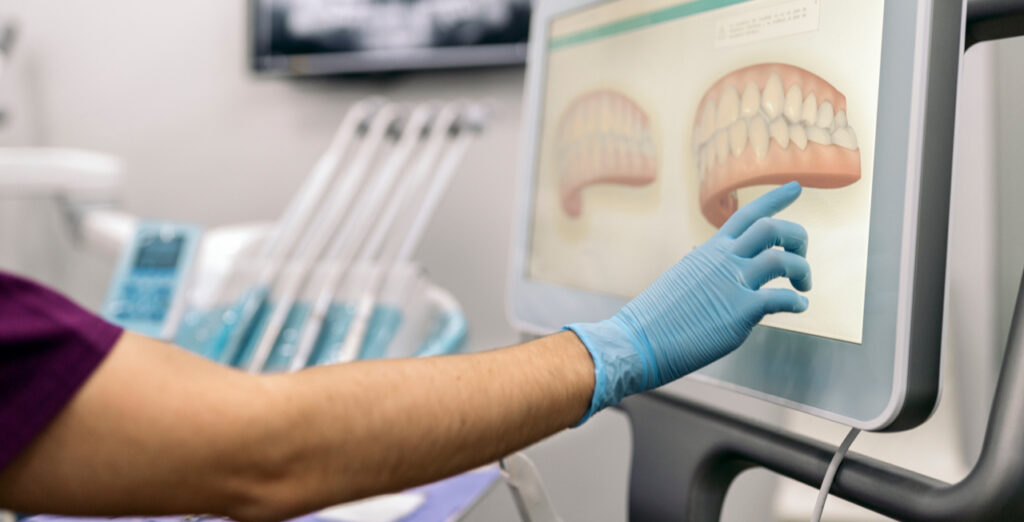
CBCT imaging and digital scans are used to create a three-dimensional model of the jaws and planned restoration. The surgical and restorative teams use that information to coordinate implant positions, a surgical guide, and the temporary prosthesis.
For selected cases, photogrammetry can capture the relationship among multiple implants after placement and help the restorative team verify the prosthetic plan. These tools improve communication between the surgical and restorative phases, but they do not replace clinical judgment.
Who May Be a Candidate for Teeth-in-an-Hour?
Candidacy is based on bone volume and quality, implant stability, bite forces, health history, nicotine use, the condition of any remaining teeth, and the ability to follow postoperative restrictions. Some patients need grafting or another treatment sequence instead.
The restorative dentist must also determine whether a preplanned temporary prosthesis can be designed, fabricated, and supported safely. If conditions at surgery differ from the digital plan, a removable temporary option or a healing period may be necessary.
Temporary Teeth Are Not the Final Restoration
When a temporary fixed restoration is connected during the surgical phase, it serves as a provisional restoration while the implants heal. Diet, cleaning, and activity restrictions remain important, even when the temporary teeth feel stable.
The final prosthesis is completed later by the restorative dentist after healing and any required verification steps. Before treatment, ask what will be temporary, how long the provisional phase is expected to last, and which office will manage adjustments.
What to Confirm Before Teeth-in-an-Hour Surgery
Confirm the final restorative design, temporary plan, surgical guide, anesthesia, diet, cleaning method, and follow-up schedule. Also ask what will happen if an implant does not reach the stability needed for the planned temporary restoration.
Before surgery, Dr. Udy and the restorative dentist will explain the backup plan if the temporary teeth cannot be attached as expected. This helps you understand the options before you consent to treatment.
Frequently Asked Questions About Teeth-in-an-Hour
Could Teeth-in-an-Hour Be an Option?
Call Northwest Oral Surgeons at 636-978-6967 to schedule an evaluation with Dr. Udy and coordinate the restorative plan with your dentist.